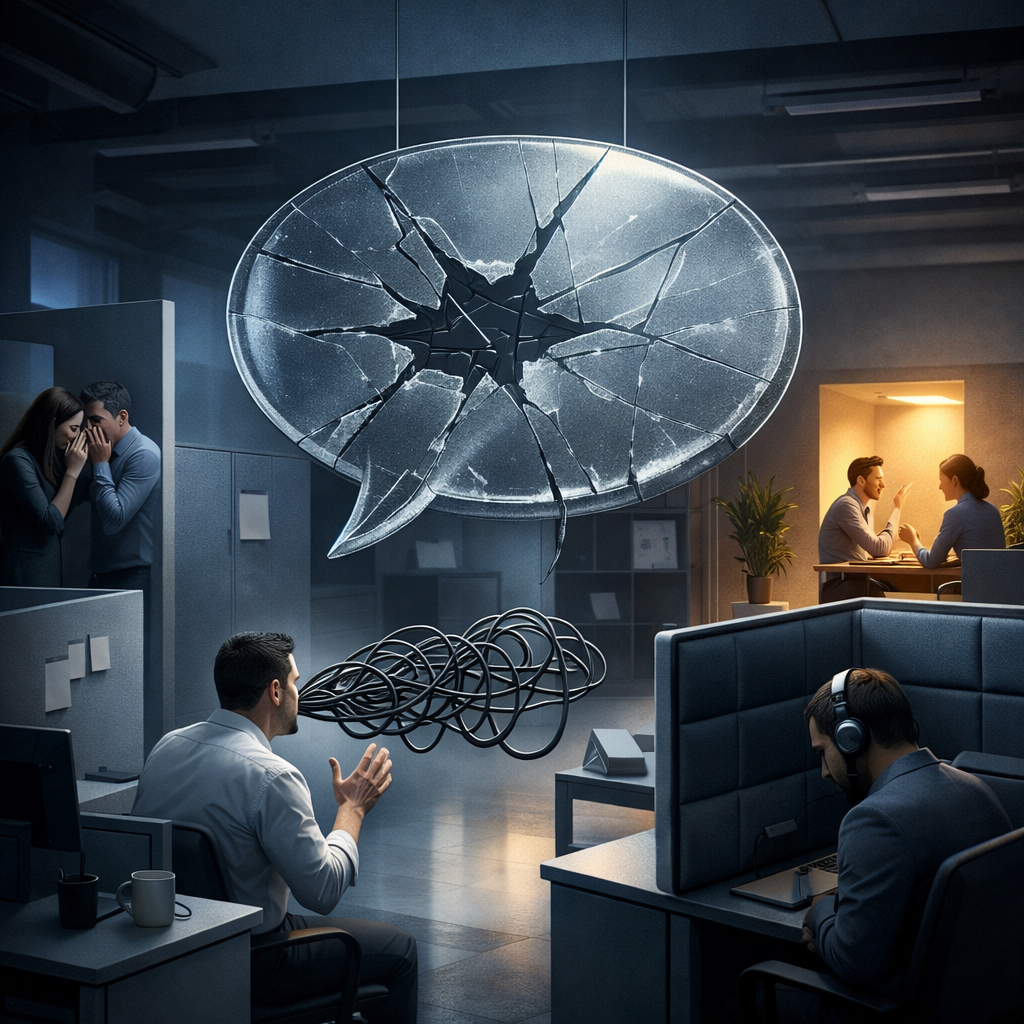
Most organizations say they want “feedback culture.”
What they actually want is for people to give and receive feedback better.
That’s a system design problem.
Why feedback doesn’t happen
Feedback isn’t safe
Organizations say “we want open feedback” then penalize people who give it.
When someone shares critical input and faces consequences, subtle or obvious, everyone else learns to stay quiet.
Safety isn’t declared. It’s demonstrated through consistency. When leaders model receiving feedback without defensiveness, when mistakes get treated as learning rather than failure, when people see others give critical input without retaliation, that’s when feedback becomes safe.
Managers aren’t trained to give feedback effectively
“Be more proactive” isn’t feedback. It’s a label.
Feedback requires specificity: “When you did X in yesterday’s meeting, it caused Y. Next time, try Z.”
Most managers were never taught this. They avoid feedback because they don’t know how to deliver it well. Without training, they default to vague statements that don’t help anyone improve.
Feedback timing is broken
Annual reviews aren’t feedback systems. They’re documentation.
By the time someone hears “you needed to be more strategic in Q2,” Q2 is over. The projects are done. The opportunity to adjust is gone.
Real-time feedback drives behavior change. Delayed feedback justifies decisions already made.
Leaders model receiving feedback without defensiveness. Mistakes get treated as learning, not failure.
People see others give critical input without retaliation.
Safety isn’t declared. It’s demonstrated over time.
Manager capability development
Train managers to give specific, timely, actionable feedback. Not once, repeatedly.
“Be more strategic” becomes “Here’s what strategic thinking looks like in this context. Let me show you an example.”
Specific examples replace vague labels. Managers learn to tie feedback to observable behaviors with clear suggestions for improvement.
Feedback loops, not feedback events
Replace annual reviews with ongoing conversations. Make feedback normal, not rare.
When feedback happens continuously, it stops feeling like criticism and starts feeling like development. Surprises in annual reviews signal system failure, feedback should have happened months earlier.
Reviews should summarize what’s already been discussed throughout the year, not introduce new information.
The distinction
Saying “we value feedback” doesn’t create feedback culture.
Designing systems that make feedback safe, specific, and continuous does.
Organizations that treat feedback as a system design challenge, not a people problem, build environments where feedback actually happens.
Is your organization asking people to give better feedback? Or building systems that enable it?
~Careeristically.